HDPE Pipe


HDPE Pipes and Fittings for Irrigation
HDPE Pipes and Fittings for Irrigations are high-density polyethylene pipes used for conveying water in agricultural irrigation systems
- 1. Material: PE80、PE100、PE100-RC、PE4710、PE3408
- 2. Size: DN20-DN2500mm
- 3. Length: 5.9 meters, 11.9 meters, can be customized according to customer needs
- 4.Pressure level: SDR33-PN5, SDR26-PN6, SDR21-PN8, SDR17-PN10, SDR13.6-PN12.5, SDR11-PN16, SDR9-PN20, SDR7.4-PN25
- 5. Color: black, blue, etc., color can be customized
- 6. Implementation standards: GB/T 13663、 GB/T 15558, ISO 4437, ISO 4427, ASTM F714, ASTM D4976
- 7. Packaging: naked
- 8. Delivery time: 5-10 days, depending on quantity
- 9. Samples: Samples can be provided free of charge
HDPE Pipes and Fittings for Irrigation details description:
HDPE Pipes and Fittings for Irrigation with high density polyethylene as raw material has significant advantages. It has strong corrosion resistance, is not afraid of acid and alkali substances in the soil and chemical fertilizer erosion, and can be long-term stable service. Good impact resistance, even in low temperature environment or external impact, it is not easy to break. Its inner wall is extremely smooth and the water flow resistance is small, which greatly improves the efficiency of water transmission, reduces energy loss, and helps save water and energy.
Easy connection, hot melt butt or electric melt connection simple and reliable, good sealing, effectively prevent water leakage. Moreover, it is resistant to aging, adding anti-aging agents and ultraviolet absorbers, which can resist the aging effects of ultraviolet light and long-term use.
In the application, HDPE Pipes and Fittings for Irrigation is widely used. In the field, whether it is field crops or cash crops, it can be combined with drip irrigation, spray irrigation and other ways to achieve precision irrigation. In the garden landscape, parks, green areas and other areas can use it to accurately supply water according to the needs of plants. In orchards, it provides stable water supply for fruit trees, guarantees fruit yield and quality, and is an ideal choice for modern irrigation projects.
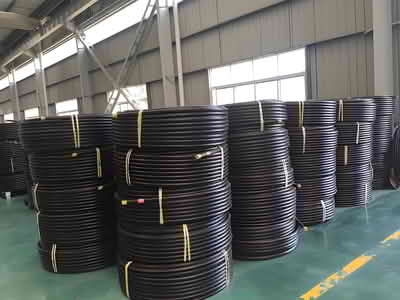


HDPE Pipes and Fittings for Irrigation material characteristics and advantages:
Excellent corrosion resistancee
HDPE Pipes and Fittings for Irrigation is made of high-density polyethylene material, which is chemically stable and has a strong tolerance to various acid and alkali substances and fertilizer solutions in the soil. It can be buried underground for a long time and is not easily corroded to ensure the service life of the pipeline.
Excellent impact resistancee
The pipe has high toughness, even in the cold low-temperature environment, or when it is hit by external forces, it can maintain the structural integrity, not easy to break, and adapt to complex and changeable terrain conditions and construction environment.
Smooth inner wall, efficient water transfere
Its inner wall is very smooth, and the resistance of water flow through is very small. This not only reduces the energy loss in the irrigation process, but also significantly improves the efficiency of water delivery, ensuring that water is evenly distributed to each irrigation area, achieving water saving and energy saving.
The connection is simple and reliablee
HDPE Pipes and Fittings for Irrigation mainly adopts two ways of hot fusion butt and electric fusion connection. The operation is relatively simple, and the sealing is good after connection, which can effectively prevent water leakage and provide guarantee for the stable operation of the irrigation system.
Excellent aging resistance
An appropriate amount of anti-aging agents and ultraviolet absorbers are added in the production process, which makes the pipe can effectively resist ultraviolet radiation in the sun, as well as the aging effect during long-term use, further extending its service life.
HDPE Pipes and Fittings for Irrigation connection:
Hot melt connection: The hot melt machine is used to heat the connection part of the pipe and pipe fittings to a molten state, and then the two are quickly bonded, cooled and solidified under a certain pressure to form a solid connection. Suitable for the same material, nominal outer diameter ≥63mm pipe and pipe, pipe and pipe fittings connection.
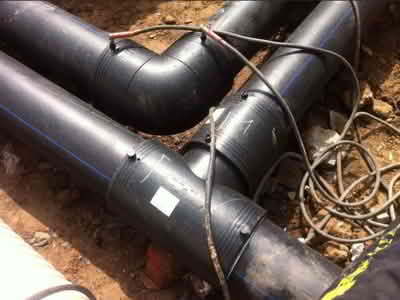
Electric fusion connection: the electric fusion pipe is set on the pipe, and the resistance wire in the electric fusion pipe is electrified through the electric fusion welding machine, so that the resistance wire heats up and the contact surface of the pipe and the pipe is melted, and the body is formed after cooling. Suitable for various specifications of HDPE water pipe connection, especially suitable for nominal outer diameter < 63mm pipe or can not use hot melt connection occasions.
Socket connection: First heat one end of the HDPE pipe to soften it, and then insert the other end into the softening end, and then heat and apply pressure to make the two closely combined. This connection method is suitable for small-caliber HDPE pipes, convenient installation, fast connection speed, but the connection strength is slightly lower than that of hot melt butt and electric melt connection.
Flange connection: The HDPE pipe and flange are connected together by hot melt or electric melt, and then the two flanges are connected by bolts, and the sealing gasket is installed in the middle to realize the connection and sealing of the pipeline. The flange connection is suitable for the connection of HDPE pipes with valves, flowmeters and other equipment, as well as the parts that need to be disassembled frequently, which is easy to maintain and overhaul.
PE quick joint connection: This joint has an internal cavity into which the PE pipe can be inserted, sealed and fixed by sealing rings or elastic clasp and other components, suitable for small and medium diameter PE pipe connection.



| ISO 4427 Pipe Series | S 3.2 | S 4 | S 5 | S 6,3 | S 8 | S 10 | S 12,5 | S 16 | PE100 | |
| ASTM F714 DR | DR 7.4 | DR 9 | DR 11 | DR 13.6 | DR 17 | DR 21 | DR 26 | DR 33 | ||
| Nominal Pressure PE 100 | PN = 25 bar | PN = 20 bar | PN = 16 bar | PN = 12,5 bar | PN = 10 bar | PN = 8 bar | PN = 6 bar | PN = 5 bar | ||
| Nominal Size DN (mm) | Equiv Size (in) | Min T.W. (mm) | Min T.W. (mm) | Min T.W. (mm) | Min T.W. (mm) | Min T.W. (mm) | Min T.W. (mm) | Min T.W. (mm) | Min T.W. (mm) | Nominal Size DN (mm) |
| 20 | 0.79 | 3.0 | 2.3 | 2.0 | 1.5 | 1.2 | 1.0 | 0.6 | 0.61 | 20 |
| 25 | 0.98 | 3.5 | 3.0 | 2.3 | 2.0 | 1.5 | 1.2 | 0.8 | 0.76 | 25 |
| 32 | 1.26 | 4.4 | 3.6 | 3.0 | 2.4 | 2.0 | 1.5 | 1.0 | 0.97 | 32 |
| 40 | 1.57 | 5.5 | 4.5 | 3.7 | 3.0 | 2.4 | 2.0 | 1.2 | 1.21 | 40 |
| 50 | 1.97 | 6.9 | 5.6 | 4.6 | 3.7 | 3.0 | 2.4 | 2.0 | 1.52 | 50 |
| 63 | 2.48 | 8.6 | 7.1 | 5.8 | 4.7 | 3.8 | 3.0 | 2.5 | 1.91 | 63 |
| 75 | 2.95 | 10.3 | 8.4 | 6.8 | 5.6 | 4.5 | 3.6 | 2.9 | 2.27 | 75 |
| 90 | 3.54 | 12.3 | 10.1 | 8.2 | 6.7 | 5.4 | 4.3 | 3.5 | 2.73 | 90 |
| 110 | 4.33 | 15.1 | 12.3 | 10.0 | 8.1 | 6.6 | 5.3 | 4.2 | 3.33 | 110 |
| 125 | 4.92 | 17.1 | 14.0 | 11.4 | 9.2 | 7.4 | 6.0 | 4.8 | 3.79 | 125 |
| 140 | 5.51 | 19.2 | 15.7 | 12.7 | 10.3 | 8.3 | 6.7 | 5.4 | 4.24 | 140 |
| 160 | 6.30 | 21.9 | 17.9 | 14.6 | 11.8 | 9.5 | 7.7 | 6.2 | 4.85 | 160 |
| 180 | 7.09 | 24.6 | 20.1 | 16.4 | 13.3 | 10.7 | 8.6 | 6.9 | 5.45 | 180 |
| 200 | 7.87 | 27.4 | 22.4 | 18.2 | 14.7 | 11.9 | 9.6 | 7.7 | 6.06 | 200 |
| 225 | 8.86 | 30.8 | 25.2 | 20.5 | 16.6 | 13.4 | 10.8 | 8.6 | 6.82 | 225 |
| 250 | 9.84 | 34.2 | 27.9 | 22.7 | 18.4 | 14.8 | 11.9 | 9.6 | 7.58 | 250 |
| 280 | 11.02 | 38.3 | 31.3 | 25.4 | 20.6 | 16.6 | 13.4 | 10.7 | 8.48 | 280 |
| 315 | 12.40 | 43.1 | 35.2 | 28.6 | 23.2 | 18.7 | 15.0 | 12.1 | 9.70 | 315 |
| 355 | 13.98 | 48.5 | 39.7 | 32.2 | 26.1 | 21.1 | 16.9 | 13.6 | 10.90 | 355 |
| 400 | 15.75 | 54.7 | 44.7 | 36.3 | 29.4 | 23.7 | 19.1 | 15.3 | 12.30 | 400 |
| 450 | 17.72 | 61.5 | 50.3 | 40.9 | 33.1 | 26.7 | 21.5 | 17.2 | 13.80 | 450 |
| 500 | 19.69 | 67.6 | 55.8 | 45.4 | 36.8 | 29.7 | 23.9 | 19.1 | 15.30 | 500 |
| 560 | 22.05 | 75.7 | 62.5 | 50.8 | 41.2 | 33.2 | 26.7 | 21.4 | 17.20 | 560 |
| 630 | 24.80 | 85.1 | 70.3 | 57.2 | 46.3 | 37.4 | 30.0 | 24.1 | 19.30 | 630 |
| 710 | 27.95 | 95.9 | 79.3 | 64.5 | 52.2 | 42.1 | 33.9 | 27.2 | 21.80 | 710 |
| 800 | 31.50 | 89.3 | 72.6 | 58.8 | 47.4 | 38.1 | 30.6 | 24.50 | 800 | |
| 900 | 35.43 | 81.7 | 66.2 | 53.3 | 42.9 | 34.4 | 27.60 | 900 | ||
| 1000 | 39.37 | 90.2 | 72.5 | 59.3 | 47.7 | 38.2 | 30.60 | 1000 | ||
| 1200 | 47.24 | 88.2 | 67.9 | 57.2 | 45.9 | 36.70 | 1200 | |||
| 1400 | 55.12 | 102.9 | 82.4 | 66.7 | 53.5 | 42.90 | 1400 | |||
| This product flyer is intended for reference purposes. It should not be used in place of the advice from a licensed Professional Engineer. Nominal pressure (PN) is based on C = 1,25 and an operating temperature of 20°C. Weight is calculated using DN and Minimum wall plus 6% for use in estimating fluid flow. Actual ID will vary. When designing components to fit the pipe ID, refer to pipe dimensions and tolerances in the applicable pipe manufacturing specification. To obtain pressure in psi, multiply bar by 14.5 (1 bar ≈ 14.5 psi). | ||||||||||
HDPE Pipes and Fittings for Irrigation are used for the following applications:
Farmland irrigation: HDPE Pipes and Fittings for Irrigation is mainly used in the irrigation system of farmland, which can effectively transport irrigation water to each farmland, meet the water demand required for crop growth, and improve agricultural production efficiency.
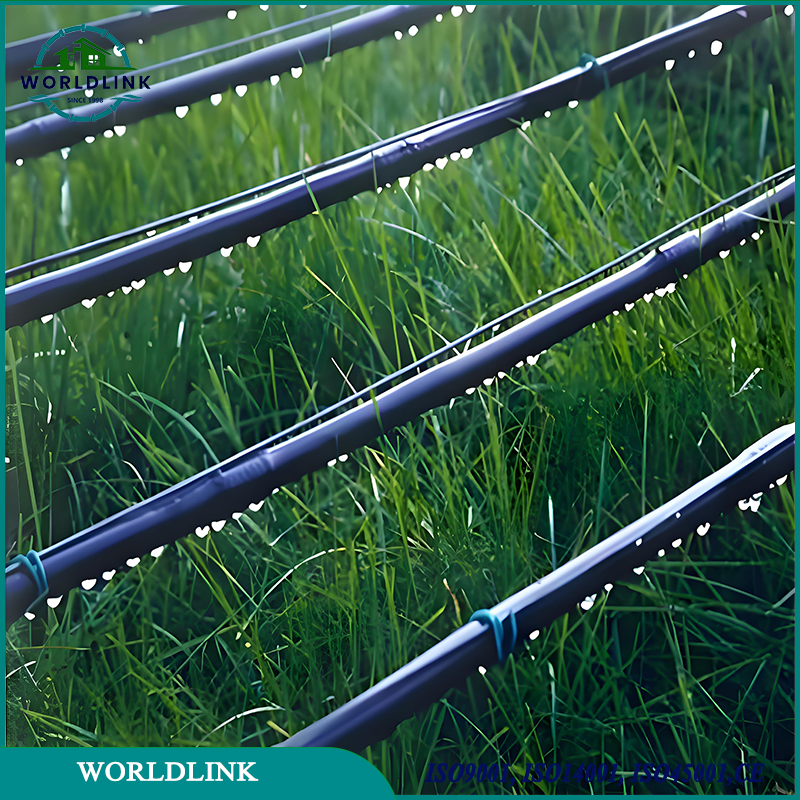
Water-saving irrigation: HDPE Pipes and Fittings for Irrigations help reduce irrigation costs and save water. Due to its efficient water transport capacity and soil-friendly properties, it is able to promote crop growth and improve the yield and quality of agricultural products.
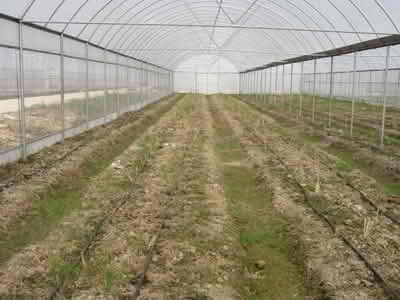
Greenhouses and greenhouses: In greenhouses, greenhouses, flower beds and other places, HDPE Pipes and Fittings for Irrigations can avoid water stains and land loss, but also help control the amount of irrigation, to achieve precision irrigation.
Urban greening: HDPE Pipes and Fittings for Irrigation is also suitable for urban greening irrigation, such as parks, trees and flowers on both sides of the street, etc., which helps beautify the urban environment.
Golf courses and other landscape water: On golf courses, gardens, public green Spaces and other places, HDPE Pipes and Fittings for Irrigations can be used to provide landscape water and maintain the healthy growth of vegetation.
HDPE Pipes and Fittings for Irrigation application picture description:
1. HDPE Pipes and Fittings for Irrigation is used in farmland irrigation
2. HDPE Pipes and Fittings for Irrigation is used in water-saving irrigation
3. HDPE Pipes and Fittings for Irrigation used in greenhouses and greenhouses
4. HDPE Pipes and Fittings for Irrigation is used in urban greening